
Conference Review:
2025 HKU-Belgium Sustainability Conference
2025 HKU-Belgium Sustainability Conference
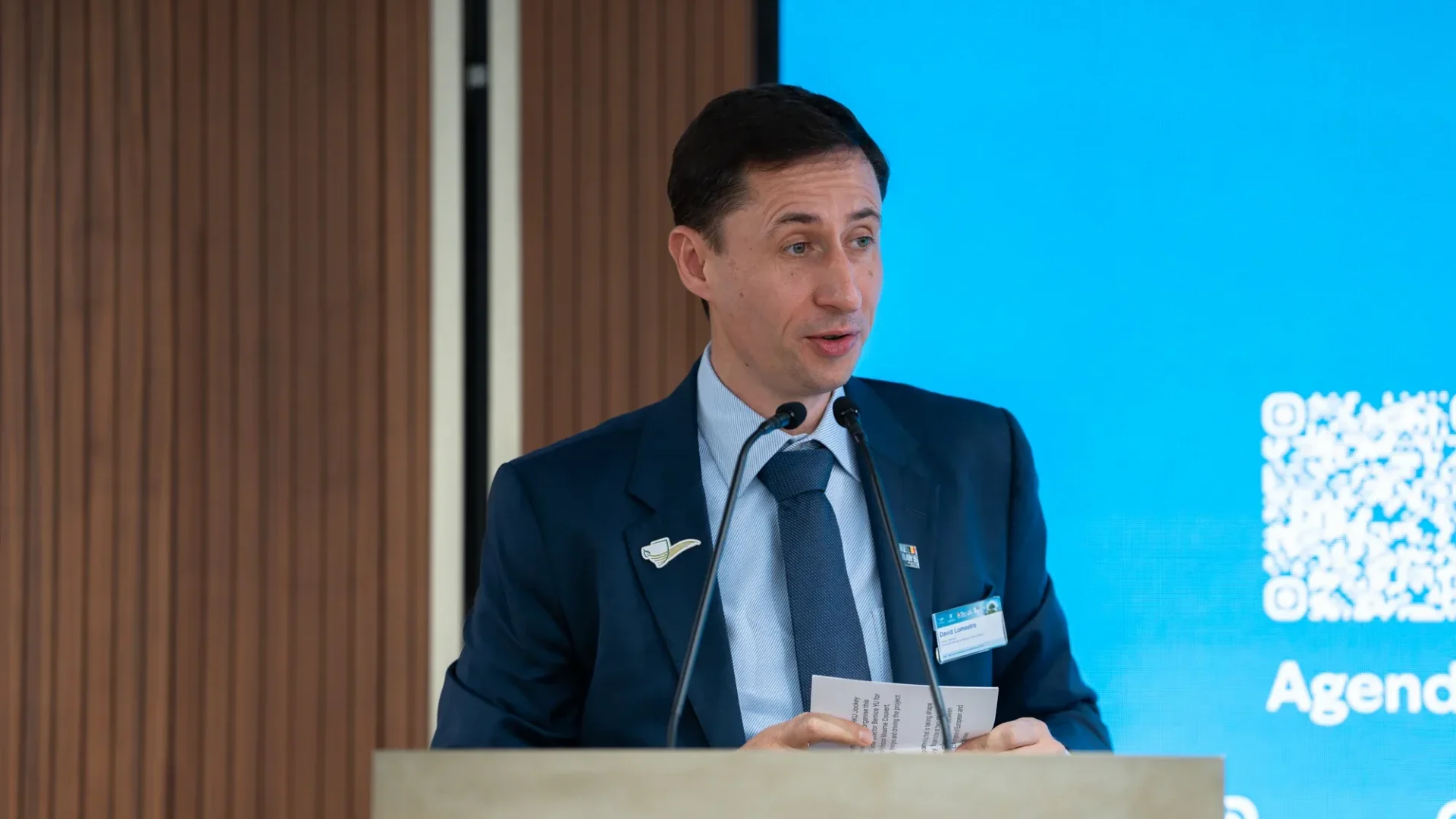
On November 21, the one-day HKU-Belgium 2025 Sustainability Conference was successfully held, dedicated to fostering cross-regional and interdisciplinary dialogue. Co-organized by the HKU Jockey Club Enterprise Sustainability Global Research Institute and the Consulate General of Belgium in Hong Kong and Macau, the event provided a dynamic platform for meaningful knowledge exchange. Opening the conference were welcome remarks delivered by Mr. David Lomastro, Consul General of Belgium, and Ms. Bernice Yu, Head of Operations at our research institute.
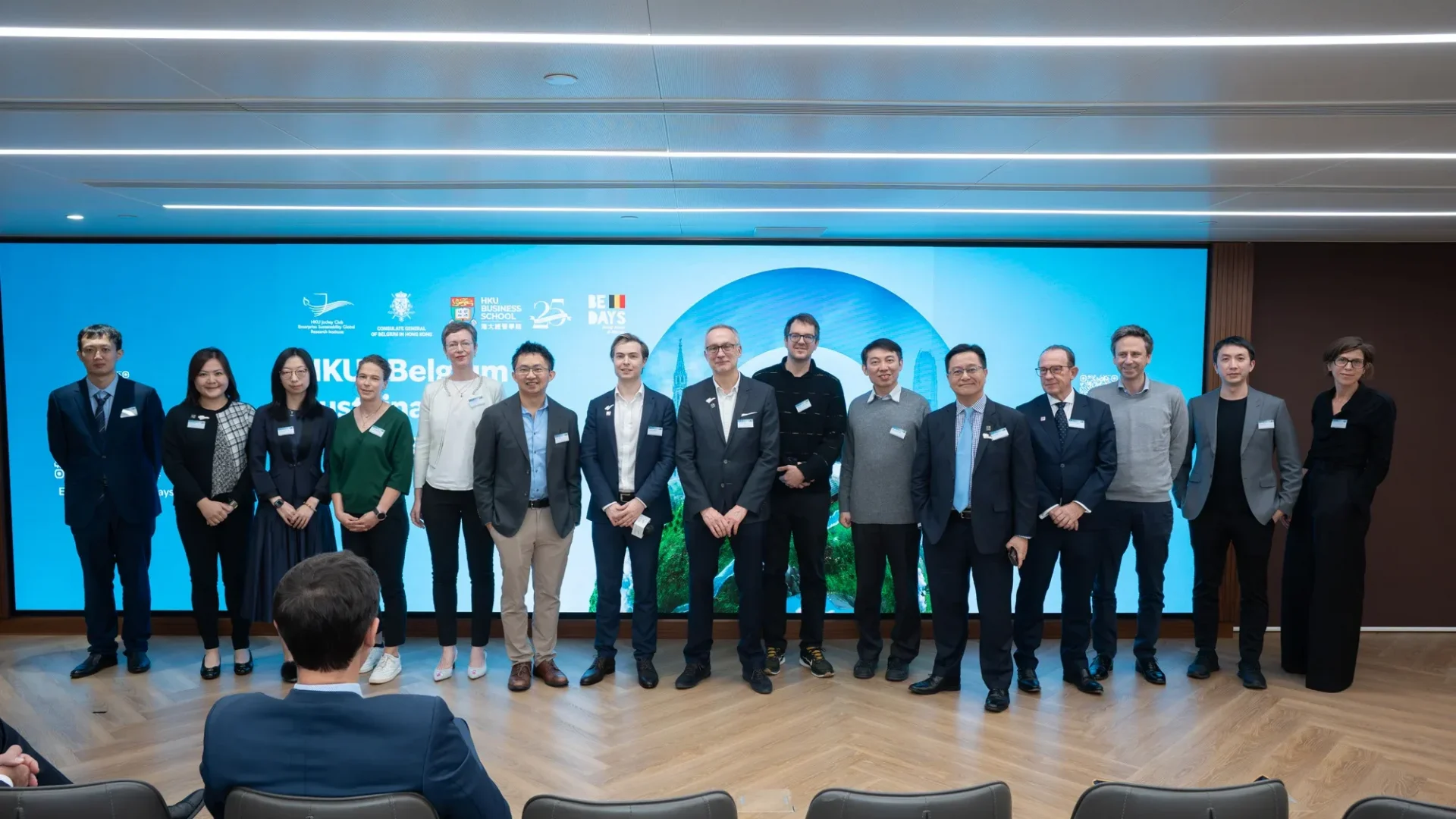
By convening leading scholars and industry practitioners from both regions, the conference enabled participants to address pressing sustainability and governance challenges while sharing forward-thinking strategies and solutions. Now, let’s take a moment to review the highlights from the scholars’ presentations and the insights shared during the panel discussions.

Presentation Highlights

Prof. Henri Servaes
Richard Brealey Professor of Corporate Governance;
Professor of Finance, London Business School
What you have to keep in mind is that if the market already values a company’s CSR proposition, that value is already embedded in its valuation and stock price. Since it is already priced in, you cannot expect it to generate excess returns.
Prof. Servaes traced CSR’s roots to historic family firms like Guinness and Solvay, which recognized that caring for employees and communities ensured longevity. On modern ESG, he noted markets are moving from “blind premiums” to “rational pricing,” with the “Warm Glow” effect explaining why investors may accept lower returns for green assets. ESG should be seen not as a source of excess returns, but as a resilience-building “moat” for turbulent times.
When climate science becomes more precise and its predictions more certain, politicians are more likely to listen and implement stricter climate policies.
Mr. Feng presented compelling evidence linking the certainty of climate science to the stringency of policy action. His research demonstrates that as scientific models converge and uncertainty around climate predictions diminishes, political hesitation wanes. This increased clarity empowers policymakers to enact stronger, more decisive measures to address climate change, confirming that scientific precision is a key catalyst for political will.

Dr. Haotian Feng
Research Postgraduate Student of Finance, The University of Hong Kong

Prof. Dunhong Jin
Assistant Professor of Finance,
The University of Hong Kong
ESG funds achieve lower emissions primarily by avoiding a small number of top polluters, while their overall investment strategy remains remarkably similar to non-ESG benchmarks.
Prof. Jin’s analysis demystified the ‘green’ label of many ESG funds, revealing that their primary strategy is often a simple exclusion of the most carbon-intensive firms. Her findings show that beyond this superficial adjustment, the funds’ core portfolios, risk profiles, and financial returns closely mirror their conventional counterparts. This suggests that their impact on decarbonization is limited and that investors should look deeper than the label.
What we find is that our AI suggestions beat the proxy advisor every single time. Using AI, we are able to find optimal voting strategies that are much better than what these proxy advisors provide.
Prof. Couvert pointed to Tesla shareholders’ approval of Musk’s high compensation, despite proxy advisors’ opposition, as revealing a flaw in traditional governance. His team trained an AI to predict post-vote stock reactions, and it outperformed both human shareholders and professional advisors. Notably, feeding it advisor recommendations did not improve its accuracy, indicating the AI had captured a deeper logic of value, acting as a purely rational observer focused on value maximization.

Prof. Maxime Couvert
Assistant Professor of Finance, The University of Hong Kong

Mr. Niraj Nanda
Chief Commercial Officer,
Anglo-Eastern Ship Management
Decarbonization is a system-wide challenge for shipping that requires immense investment, global collaboration, and digitalization to navigate.
Mr. Nanda provided a stark overview of the shipping industry’s monumental task of decarbonization, framing it as an essential but costly transformation requiring trillions in investment. No single entity can solve this alone, calling for harmonized global regulations and cross-sector partnerships to develop new fuels and technologies. Digitalization, he argued, is the engine that will drive efficiency and enable this complex, system-wide transition.
The high cosmetic standards for produce are a direct result of our willingness t so pay for perfection, creating a significant, though often invisible, source of food loss.
Prof. Crama’s research indicates that roughly one-third of global food waste is driven by retailers’ appearance standards. She explains that selling visually “perfect” produce, allows retailers to position these items as premium, commanding higher prices. She suggests that banning such standards may backfire. A more effective solution is redesigning supply chain contracts to align incentives between retailers and farmers for the sale of “ugly food”.

Prof. Pascale Crama
Professor of Operations Management,
Singapore Management University

Prof. Shipeng Yan
Assistant Professor of Management and Strategy,
The University of Hong Kong
The threat of legally mandated operational change is a far more powerful driver for decarbonization than the risk of purely financial penalties.
Prof. Yan’s research revealed how companies strategically respond to the threat of climate litigation by observing their peers. He found that firms actively reduce emissions when faced with lawsuits seeking direct operational changes (injunctive relief). In contrast, when litigation only demands financial compensation, firms do not alter their behaviour, suggesting that the risk of being forced to change how they operate is the most effective legal deterrent.
Even without explicit sustainability clauses, a firm's past environmental and social performance directly impacts its future contracting opportunities with the government.
Prof. Goldman presented evidence from government procurement, showing a clear market-based mechanism for corporate accountability. His research demonstrates that firms with a history of negative ESG incidents are penalized with smaller and shorter contracts. This functions as an implicit form of discipline, proving that a positive social and environmental track record is a tangible asset in securing government business.

Prof. Jim Goldman
Assistant Professor of Finance, McGill University

Prof. Cara Vansteenkiste
Senior Lecturer (Assistant Professor) in Finance,
The University of Sydney
Corporate charity is not always altruistic; it can be a strategic tool used to build goodwill and mitigate resistance during critical corporate events like M&As.
Prof. Vansteenkiste unveiled the strategic dimension of corporate philanthropy, particularly around mergers and acquisitions. Her findings show that acquiring firms significantly increase donations to charities connected to the target’s key stakeholders—executives, employees, and shareholders—prior to a deal. This suggests that charitable giving is strategically deployed to smooth the M&A process by currying favour and pre-empting opposition.
The language we use is a powerful and underutilized tool; framing messages with empathy and simplicity is key to effectively engaging vulnerable communities.
Prof. Huysentruyt highlighted the critical role of language in the success of social impact initiatives. She argued that understanding the nuances of language, from framing relationships to interpreting semantic misalignment as a sign of urgency, can dramatically improve the effectiveness and reach of hybrid organizations.
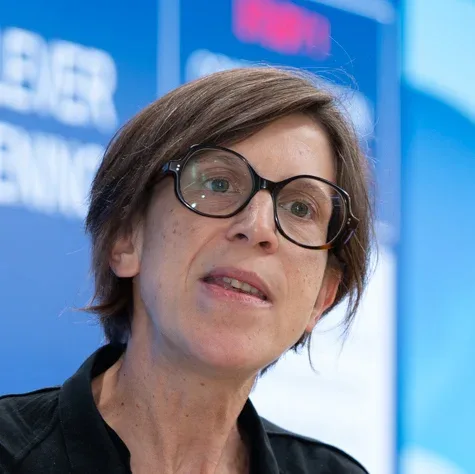
Prof. Marieke Huysentruyt
Associate Professor in Strategy and Business Policy, HEC Paris
Panel Discussion
Topic 1 – Green Mandates: Aligning Capital with Sustainable Goals
The panel explored the evolving landscape of sustainable finance in Asia versus Europe.
- It has been agreed that while Europe has led in regulation, Asia is rapidly developing its own customized frameworks with a strong emphasis on fiduciary duty.
- The primary obstacle to effective ESG integration is not a lack of capital, but a lack of high-quality, standardized data.
- A strategic shift, from simple exclusion-based investing to more sophisticated approaches, has been highlighted, demonstrating a maturation of the market beyond compliance.
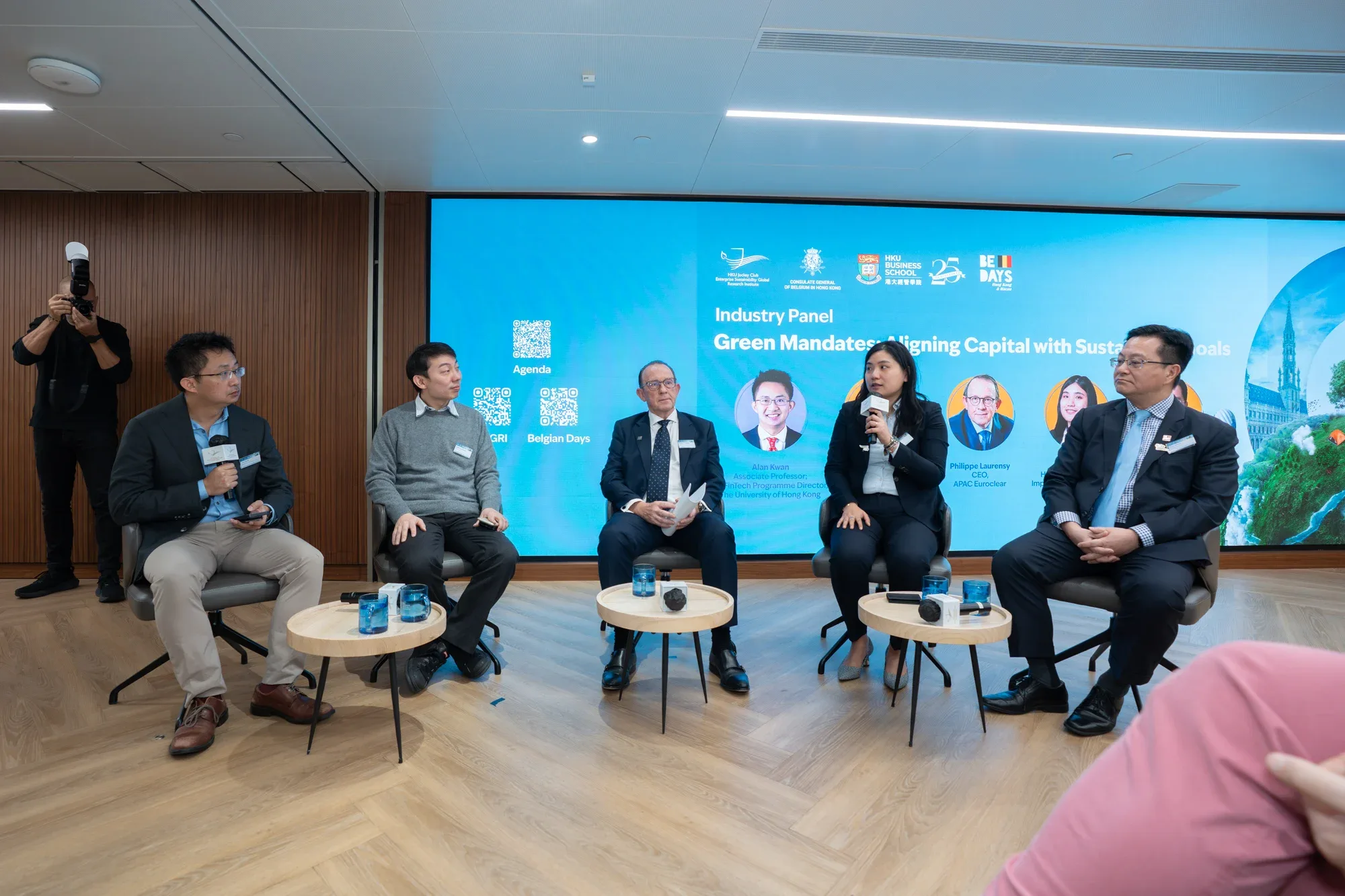
From Left to Right: Prof. Alan P. Kwan (The University of Hong Kong), Prof. Anthony Cheung (Polymer Capital Management), Mr. Philippe Laurensy (Euroclear); Ms. Nana Li (Impax Asset Management), Mr. Rizal Wijono (Syncicap Asset Management)
Topic 2 – From Extraction to Emission: Green Energy in the Supply Chain
The panel addressed the immense challenges of decarbonizing capital-intensive supply chains like shipping, aviation, and mining.
- The transition requires a systemic approach, as no single company or technology can solve the problem alone.
- Massive investments are needed for new infrastructure and alternative fuels, noting that high costs and policy uncertainty remain significant barriers.
- Supportive government policies play critical role in creating stable demand and de-risking private investment.
- Building a circular economy, particularly for critical materials like batteries, is a key pathway to achieving both sustainability and supply chain resilience.
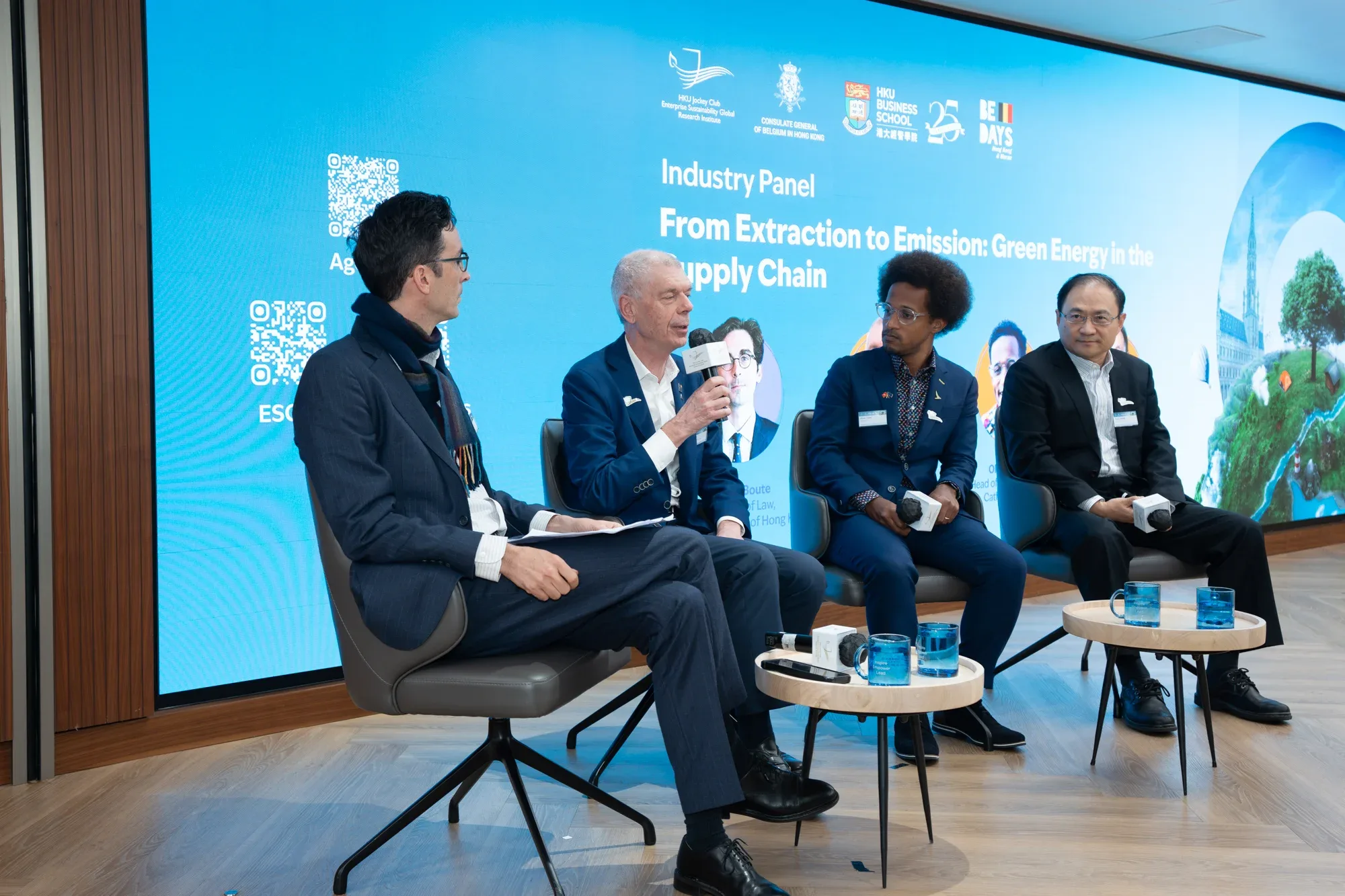
From Left to Right: Prof. Anatole Boute (Chinese University of Hong Kong), Mr. Jan Cuyt (Port of Antwerp-Bruges), Mr. Oliver Haas (Cathay Pacific), Mr. Frank Zhang (Umicore)